
Whirlybird

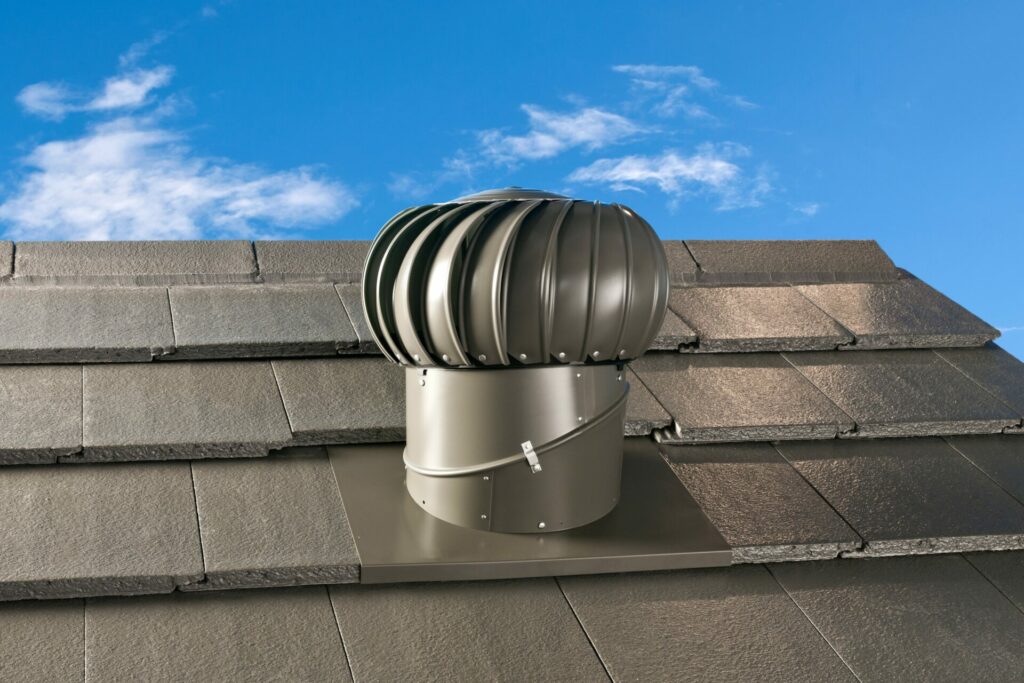
A turbine vent (also called a whirlybird) is a wind-powered roof vent designed to improve attic ventilation. It uses spinning blades to pull hot, moist air out of the attic space.
How Whirlybird Works
Wind turns the turbine head (the spinning dome). As it rotates, it creates negative pressure that pulls warm, humid air out of the attic. Fresh air then enters through the soffit vents.
No electricity is needed — the system is fully passive and powered by wind.
Key Components
Turbine head — spinning aluminum dome with fins
Base/flashing — seals the vent to the roof
Shaft and bearings — allow smooth rotation
Throat (neck) — connects the vent to the attic opening
Common Sizes of Whirlybird ventilation
12” — most common for residential homes
14”–16” — used for higher airflow or larger attic spaces
Larger diameter means more air movement.
Pros
Improves attic airflow without electricity
Helps reduce heat buildup in summer
Assists with moisture removal, especially in colder climates
More affordable than powered ventilation systems
Cons (Important for Metal Roofing)
Performance depends on wind, so airflow drops on calm days
Moving parts wear out over time and can become noisy
Less visually clean compared to modern roofing systems
Additional roof penetrations increase leak risk if poorly installed
Whirlybird: Use in Metal Roofing Systems
In modern metal roofing, turbine vents are used less often and are commonly removed during re-roofing.
Metal roofs prioritize clean lines and minimal penetrations. Ridge vent systems combined with soffit intake provide more consistent airflow. Turbines can disrupt the look of standing seam roofs and typically don’t match the longevity of newer ventilation solutions.
When Turbine Vents Still Make Sense
They can still be useful when ridge vent installation isn’t possible due to roof design, in retrofit situations with poor ventilation, or when working within a tight budget. They may also be used as supplemental ventilation.
Replacement Considerations
During a metal roof upgrade, turbine vents are often removed. The roof deck is repaired and sealed, and the system is upgraded to ridge ventilation.
This is also a common improvement homeowners choose when upgrading to metal roofing.
Use in Metal Roofing Systems (Ridge Vent Conflict)а
Turbine vents should not be used together with ridge vents on the same roof system.
Both systems act as exhaust vents, and when combined, they start competing instead of working together. Air follows the path of least resistance, so instead of pulling fresh air from soffits, a turbine vent can begin drawing air directly from the ridge vent.
This creates several problems:
- Reduced overall ventilation efficiency
- Short-circuiting airflow (air exits before circulating through the attic)
- Uneven temperature and moisture control
- Higher risk of condensation issues in winter
Proper attic ventilation should follow a balanced system:
Intake — soffit vents
Exhaust — either ridge vent or turbine vents, not both
Pro Insight
When installing a new metal roof, turbine vents are typically removed if a ridge vent system is added. Keeping both is considered poor ventilation design and is a common mistake in older or DIY-modified roofs.
Final Thoughts
Turbine vents are an older, wind-driven solution that still works, but they are no longer the preferred option for modern metal roofing systems. Ridge ventilation offers better performance, durability, and aesthetics.
See our works
Giving you a sense of what a metal roof will look like in your home of commercial property