
5 Key Differences Between Galvalume Steel and Galvanized
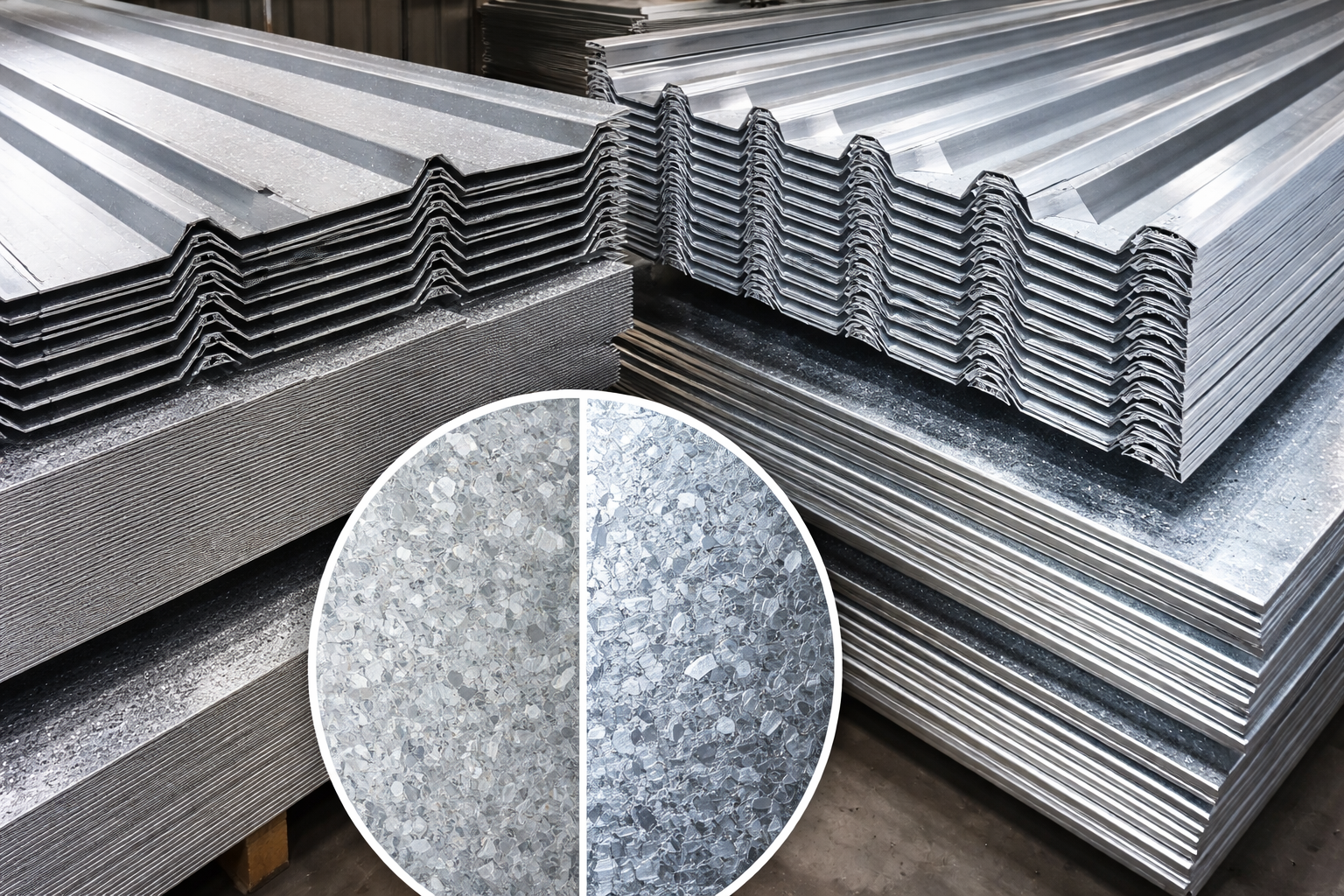
Choosing the right metal for your roof is one of the most important decisions in any roofing project. Two of the most commonly used materials are Galvalume steel and galvanized steel. At first glance, they may look similar, but their performance, lifespan, and suitability for roofing are very different.
If you’re planning a metal roof in Canada — especially in climates with snow, moisture, and freeze-thaw cycles — understanding this difference is critical.
What Is Galvalume Steel?
Galvalume steel is a coated metal that combines aluminum, zinc, and a small amount of silicon. This combination creates a highly durable material that resists corrosion and performs exceptionally well in roofing applications.
The aluminum acts as a protective barrier against moisture, while the zinc provides sacrificial protection, meaning it corrodes instead of the steel when exposed to damage. This dual protection system is what makes Galvalume one of the most advanced materials used in modern metal roofing systems, including standing seam.
What Is Galvanized Steel?
Galvanized steel is coated with a layer of zinc only. This coating protects the steel by sacrificing itself over time, preventing rust from forming on the base metal.
It has been used for decades in construction and is still widely applied in structural components, fasteners, and budget-friendly roofing systems. While it offers solid protection, it does not provide the same long-term corrosion resistance as Galvalume.
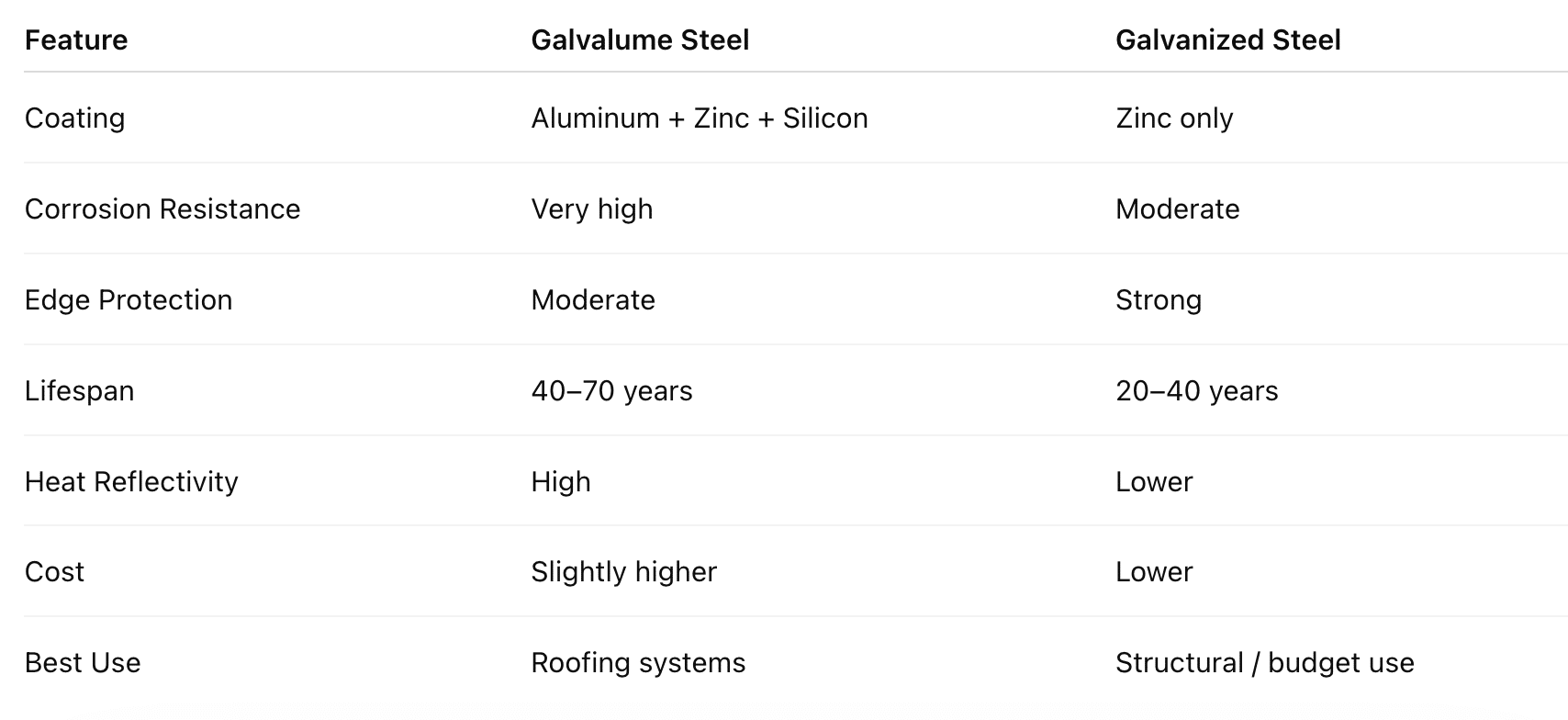
Galvalume vs Galvanized Steel (Side-by-Side Comparison)
Read more: Top Metal Roofing Materials for 2026: Choosing the Best Metal Roof for Canadian Home
Galvalume vs Galvanized Steel: Coating Composition
One of the main differences between Galvalume and galvanized steel lies in their coating composition. This directly affects how each material performs in real-world roofing conditions.

Galvalume’s aluminum-rich coating creates a strong barrier that slows down corrosion, while the zinc component provides sacrificial protection when the surface is damaged. The small amount of silicon helps the coating bond more effectively to the steel.
Galvanized steel, on the other hand, relies almost entirely on zinc. This makes it very effective at protecting exposed edges and scratches, but the coating gradually wears away over time, especially in environments with constant moisture.
Because of this difference, Galvalume performs better for long-term roofing applications, while galvanized steel is often used where edge protection is more critical or where the material is not continuously exposed to weather.
Read more: Top Tips to Protect Metal Roofs from Saltwater Corrosion
Key Differences Explained
- Corrosion Resistance
Galvalume outperforms galvanized steel in most environments because aluminum creates a long-lasting barrier against moisture. This is especially important for roofing, where constant exposure to rain, snow, and condensation occurs.
- Edge Performance
Galvanized steel has an advantage at cut edges because of its higher zinc content. It actively protects exposed steel through sacrificial corrosion. Galvalume, while still protected, may require additional sealing on exposed edges.
- Heat & Energy Efficiency
Galvalume reflects more heat due to its aluminum content. This can reduce attic temperatures and improve overall energy efficiency — an important factor for homes exposed to strong sunlight.
- Lifespan & Durability
In roofing applications, Galvalume typically lasts significantly longer. It maintains structural integrity and coating performance over decades, while galvanized steel gradually wears down as the zinc layer is consumed.
- Cost vs Long-Term Value
Galvanized steel is cheaper upfront, but Galvalume delivers better long-term value due to its extended lifespan and lower maintenance requirements.
Which One Is Better for Metal Roofing?
In real-world roofing applications, galvanized steel is still the most commonly used material, especially in residential projects. It offers a strong balance of durability, cost, and reliability, making it a practical choice for most homes.
Modern galvanized steel, especially with coatings like G90, provides solid corrosion resistance and performs well in typical Canadian conditions when paired with proper installation and underlayment. For most homeowners, it delivers long-term performance without the higher cost associated with alternative coatings.
Galvalume, while technically more corrosion-resistant, is not always necessary. Its benefits are more noticeable in specific conditions than in standard residential roofing.
Galvalume is typically used in cases where the roof is exposed to harsher environments or more demanding design requirements. This includes low-slope roofs where water drains more slowly, areas with high humidity or frequent condensation, and architectural systems like standing seam, where long panel runs and thermal movement require enhanced material stability. It is also preferred in projects where maximum lifespan and premium performance are the main priorities.
Another key factor is the overall roofing system. Even the best metal panels depend heavily on what’s underneath. A properly installed underlayment— such as Ice & Water Shield — plays a critical role in protecting the roof deck from moisture, especially in climates with snow and freeze-thaw cycles.
Common Mistakes When Choosing Between Galvanized & Galvalume
One of the most common mistakes is comparing the two materials as if one is always universally better than the other. In reality, the right choice depends on the roof system, slope, climate, and budget. Galvalume has stronger corrosion resistance in many situations, but galvanized steel remains a very practical and widely used option for roofing when the correct coating specification is selected.
Another mistake is ignoring the actual coating standard. Not all galvanized steel is the same. For roofing, G90 galvanized steel is a much more reliable choice than lighter coatings such as G60. If homeowners compare Galvalume to a lower-grade galvanized product, the comparison becomes misleading from the start.
Many people also focus only on the metal itself and forget that roofing performance depends on the full assembly. The panel, underlayment, fasteners, ventilation, and flashing details all affect how the roof performs over time. Even a better-coated steel will not compensate for poor installation or missing waterproof protection beneath the panels.
A further issue is choosing material without considering roof design. On low-slope roofs, long panel runs, or more demanding standing seam systems, Galvalume may offer additional value because of its corrosion resistance and stability. On more typical residential roofs, galvanized steel is often a rational and cost-effective solution.
Another mistake is assuming the visible finish tells the full story. Two roofs may look nearly identical from the ground, but coating type, gauge, paint system, and panel profile can make a major difference in lifespan and maintenance needs. That is why material decisions should be based on specifications, not appearance alone.
Before choosing between Galvalume and galvanized steel, make sure you check:
the coating standard (G90 vs lower grades)
the type of roofing system (standing seam vs exposed fastener)
roof slope and complexity
underlayment quality and waterproofing details
panel thickness (24 vs 26 gauge)
installation method and contractor experience
Finally, homeowners often do not ask where the upgrade is truly justified. Galvalume can be a smart choice in certain premium or technically demanding applications, but it is not always necessary for every residential roof. In many cases, properly specified galvanized steel provides the balance of durability, availability, and value that makes the most sense.
Recent Blogs
 Dumpster Rental for Roof Replacement in Canada: Costs, Risks & What Homeowners Should Know2026-04-13
- Top 10 Common Roofing Problems in Calgary Homes (And How Metal Solves Them)2026-04-13
- 5 Key Differences Between Galvalume Steel and Galvanized2026-03-27
- Hip Roof vs Gable Roof: 6 Key Differences You Should Know2026-02-13
- Top 10 Metal Roofing Companies in Vancouver to Deal With2026-02-05


See our works
Giving you a sense of what a metal roof will look like in your home of commercial property