
Aluminum Roofing

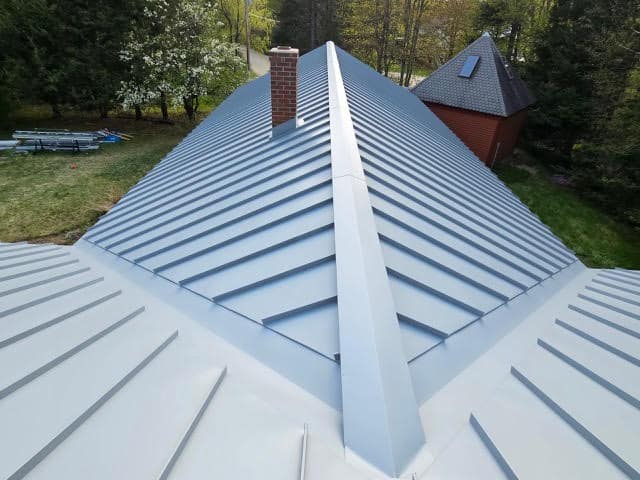
Definition: Aluminum roofing is a type of metal roofing made from lightweight, corrosion-resistant aluminum panels or shingles. Known for its durability, energy efficiency, and resistance to rust, aluminum roofing is a popular choice for both residential and commercial buildings, particularly in coastal or humid areas (Lake Ontario, Lake Huron, Lake Erie) where other metals might corrode. Aluminum roofing is available in various styles, including standing seam panels, shingles, and tiles, allowing homeowners to achieve both aesthetic appeal and high performance.
Read more: Metal Roofing in Coastal Areas
Types of Aluminum Roofing:
- Standing Seam Panels: This type features raised seams that interlock, providing a sleek, modern look. Standing seam aluminum roofing is highly weather-resistant, as the seams create a continuous surface that directs water away from the roof.
- Aluminum Shingles: Aluminum shingles mimic the look of traditional roofing materials, such as asphalt or wood shakes, but with the added benefits of metal. They are often chosen for their aesthetic flexibility, fitting well with a variety of architectural styles.
- Aluminum Tiles and Slates: These options replicate the appearance of clay tiles or slate, providing a premium look without the weight of traditional materials. Aluminum tiles offer the classic appeal of tile roofing with the durability and lightweight properties of metal.
Disadvantages of Aluminum Roofing:
- Thermal Expansion and Contraction: Aluminum expands and contracts with temperature changes. To manage this, aluminum roofing requires a well-designed fastening system to prevent noise or loosening of panels.
- Potential for Dents: While aluminum is durable, it is also softer than other metals, such as steel. In areas prone to heavy hail, aluminum roofs may dent, though higher-gauge aluminum options can mitigate this risk.
Maintenance Tips:
- Regular Cleaning: Aluminum roofs should be cleaned periodically to remove debris, dirt, and leaves that can accumulate over time.
- Inspection After Severe Weather: After storms or extreme weather, it’s recommended to inspect the roof for any signs of damage, such as dents or loose panels.
- Preventative Repairs: Any signs of wear, loose fasteners, or damaged flashing should be repaired promptly to maintain the roof’s integrity.
Aluminum roofing is an excellent choice for homeowners and businesses seeking a long-lasting, eco-friendly, and corrosion-resistant roofing solution. While the initial investment may be higher than some materials, the durability, low maintenance, and energy efficiency make aluminum roofing a smart, sustainable choice.
See our works
Giving you a sense of what a metal roof will look like in your home of commercial property