
Ice & Water Shield

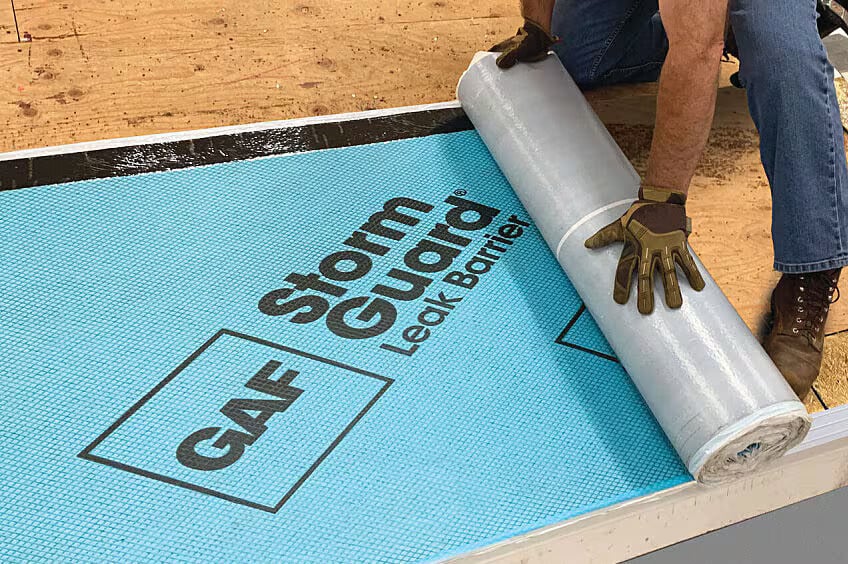 Definition: Ice & Water Shield is a self-adhering waterproof membrane applied directly to the roof deck to protect against water intrusion. Unlike traditional underlayment, it fully bonds to the surface, creating a sealed barrier that prevents water from reaching the wood structure below.
Composition
Ice & Water Shield is typically made from a rubberized asphalt base combined with a high-strength polyethylene or polymer film on top. The rubberized asphalt is what gives the material its waterproofing ability and flexibility. It remains slightly elastic, allowing it to seal tightly around nails and fasteners even after installation.
The top layer is designed to resist tearing, UV exposure (for limited periods), and foot traffic during installation. In higher-end versions, especially those used under metal roofing, the membrane is engineered to withstand elevated temperatures without degrading or sticking to the metal panels.
Popular Manufacturers
In North America, the most commonly used and trusted Ice & Water Shield products come from brands like
- GAF,
- IKO,
- CertainTeed,
- Owens Corning.
Each offers standard and high-temperature versions, with the latter being especially important for metal roofing systems.
Contractors often choose based on adhesion quality, cold-weather performance, and compatibility with specific roofing materials rather than just price.
Why It’s Critical for Metal Roofing
With metal roofing, Ice & Water Shield is not just an upgrade — it’s a key part of the system. Metal roofs behave very differently from asphalt shingles. They shed snow more quickly, which creates freeze-thaw cycles at the eaves, and they expand and contract significantly with temperature changes.
Because of this movement, even a perfectly installed metal roof can develop micro-gaps over time around fasteners, seams, or transitions. Ice & Water Shield acts as the last line of defense. If water ever gets past the metal panels, it cannot penetrate the membrane.
Another important factor is condensation. Metal roofs are more prone to temperature differences between interior and exterior surfaces, especially in climates like Canada. This can lead to moisture forming underneath the panels. A fully adhered membrane prevents that moisture from reaching and damaging the roof deck.
High-temperature Ice & Water Shield is especially important under metal systems like standing seam. Standard membranes can degrade or stick to the underside of metal panels when exposed to high heat, while high-temp versions remain stable and maintain their protective properties.
See our works
Giving you a sense of what a metal roof will look like in your home of commercial property